What is a Biokineticist?
A health care professional rooted in the study of biomechanics and human movement. Their focus is to improve physical function and quality of life through scientific designed exercise and movement programs.
A Biokineticist is a clinical exercise specialist in injury rehabilitation/prevention, chronic diseases management including neurological conditions and physical wellness promotion.
WHEN TO CONSULT A BIOKINETICIST
- You’re living with a chronic condition such as heart disease, diabetes, arthritis, or high blood pressure
- You’re struggling with orthopaedic issues that affect your daily function and quality of life
- You’re recovering from surgery and need help regaining strength and mobility
- You’ve had an injury that still limits your ability to move or perform at your best
- You experience recurring sports injuries that prevent consistent performance
- You have poor posture or pain related to postural imbalances
- You have been diagnosed with scoliosis or Scheuermann’s kyphosis
- You suffer from chronic or recurring back pain
- You need a structured exercise plan as part of a weight management programme
- You lead a sedentary lifestyle and want to safely increase your activity level
- You want to enhance your general physical performance and overall wellness
Biokinetics and what to expect
During your first visit your Biokineticist will take your medical history and perform a comprehensive assessment. Your biokineticist will then discuss with you the available treatment options and expectations for future sessions. This will be followed by clinically reasoned treatment which might include:
- Condition specific exercises (isometric/isotonic, isokinetic)
- Stretching
- Breathing
- Physical and cognitive training
- Balance/fall prevention
In some cases, you might be asked to get a referral to a specialist or for an X-ray to ensure that you are offered the best possible treatment.
About me
Olivia Langston Is a registered BSc Hons Biokineticist registered with the HPCSA and BASA (health professional council of south Africa and biokinetics association of south Africa). She has a passion for the rehabilitation of injuries and the improvement of quality of life. She has a background working with chronic diseases, fall prevention, neurological conditions and back pain.
She specializes in the treatment of scoliosis and Schuurmans kyphosis using the Schroth method taught to her by Viktoria Kitanova (certified international Schroth scoliosis therapist)
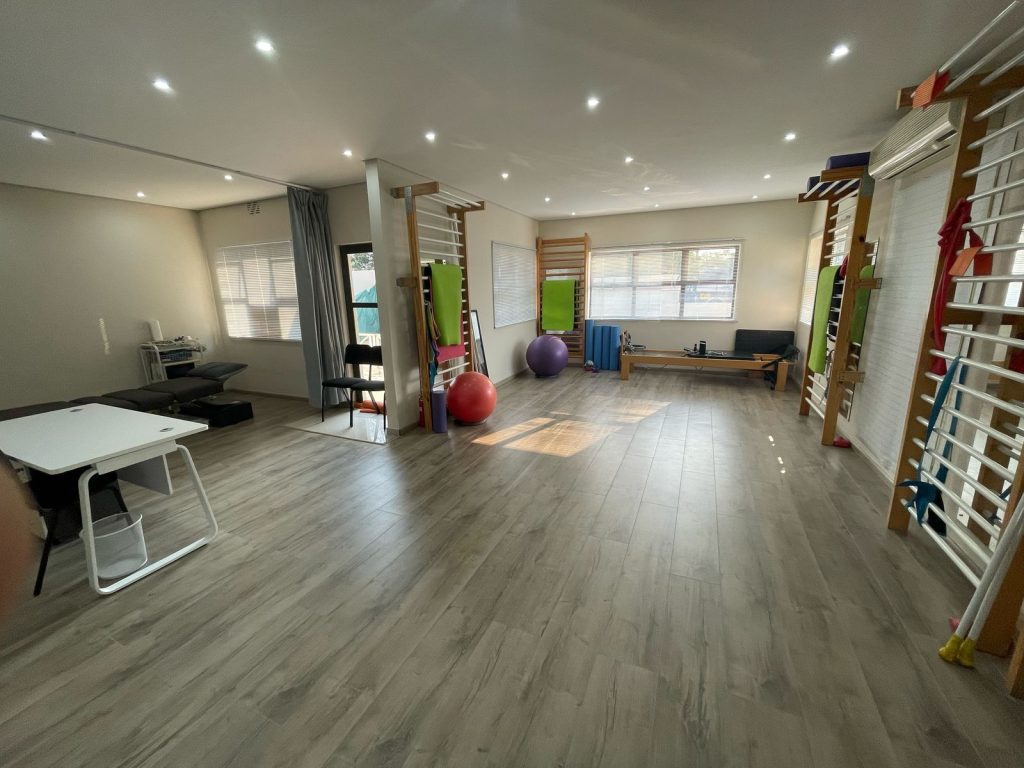
At Olivia Langston Biokineticist, we specialize in helping you move better, feel stronger, and live healthier through evidence-based exercise therapy. The practice is located in a multidisciplinary medical building; this enables us to collaborate closely with other healthcare professionals to provide a holistic approach to your health. Whether you’re recovering from surgery, managing chronic conditions like arthritis, or seeking to enhance athletic performance, we are here to guide you every step of the way.
At the practice we take the time to understand your specific challenges and goals, creating personalized rehabilitation plans that prioritize your long-term well-being. Focused on functional movement, improved mobility, and overall wellness, our goal is to help you achieve a better quality of life in a warm and supportive environment.
Services offered:
| Orthopaedic Rehabilitation | Back pain, joint injuries, and recovery after orthopaedic surgery |
| Chronic Disease Management | Support for conditions such as diabetes, hypertension, and arthritis |
| Neurological Rehabilitation | Tailored programs for stroke, Parkinson’s disease, and multiple sclerosis |
| Special Populations | Safe and effective care for older adults, pregnant women, and other groups |
| Scoliosis Treatment | Schroth Method-based 3D spinal correction and posture-focused therapy |
| Scheuermann’s Kyphosis | Specialized postural and spinal rehabilitation using Schroth principles |
| Postural & Biomechanical Assessments | Identifying and correcting imbalances to improve function and reduce pain |
| Kinesiology Strapping | Applied where appropriate to support movement and healing |
What is idiopathic scoliosis
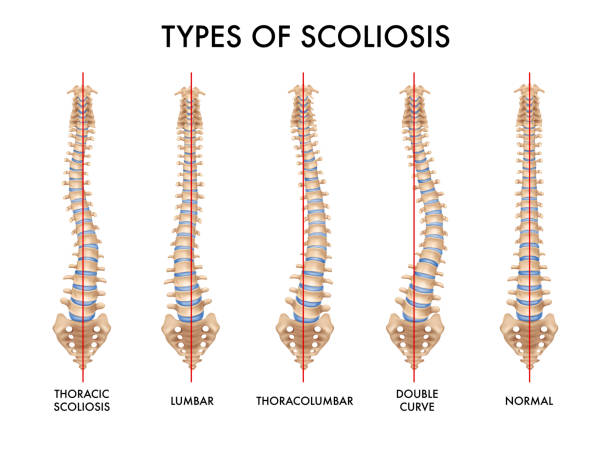
The most recent definition of scoliosis describes it as a Three- dimensional torsional deformity of the spine and trunk .It causes abnormal lateral curvatures of the spine, vertebral rotation and increase or decrease of the normal spinal curves(hyper kyphosis and flat back).
The cause for Idiopathic Scoliosis is still unknown. There are probably multiple factors leading to it. It can start or progress at any period of rapid growth. The progression is more common in girls than in boys and happens mainly during puberty.
If left untreated such scoliosis may lead to severe trunk deformities, which limit the functional biomechanics of the chest and decrease the lung capacity, exercise and general fitness and ability to work.
What is the Schroth method?
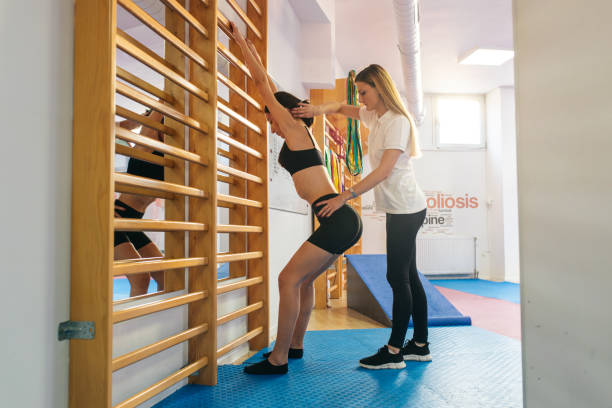
Therapeutic method for 3D treatment of scoliosis and Schuurmans kyphosis using deformity specific exercises, spinal positioning, correctional breathing and isometric contractions. There are many different scoliosis patterns, therefore the exercise suitable for one pattern is usually contraindicated for another. The Schroth method was developed in Germany in 1921 by Katharina Schroth and is currently the most researched and widely used method of correctional exercises for scoliosis in the world.
The basic objectives of comprehensive conservative treatment of Idiopathic Scoliosis according to SOSORT are:
1. To stop curve progression at puberty (or possibly even reduce it)
2. To prevent or treat respiratory dysfunction,
3. To prevent or treat spinal pain syndromes
4. To improve aesthetics via postural correction
Who is the Schroth Method for?
The Schroth Method is suitable for individuals of all ages with scoliosis, including those who do not require braces and those who wear braces
Expected results when using the Schroth Method
- Avoidance of surgery
- Prevention of further progression of the abnormal curvatures
- Some reversal of the abnormal curvatures
- Reduced pain
- Improved posture and appearance
- Improved quality of life
- Increased lung function
- Decreased pressure on the internal organs
- Maintaining the results